Thursday, August 4, 2011

HEADACHE AND EYE.


                This is really very interesting topic. As more than half of the patient visiting to any eye doctor have headache as main complaint. Half of them are referred by some genral practitioner and half of them are self motivated. How much of them really have ophthalmic cause for headache in my opinion hardly 10 % of them have significant eye problem that may cause headache.
Since I am an ophthalmologist let us first discuss the ophthalmic cause of headache.
The headache associated with vision
The commonest eye problem that may lead to headache is over straining of cilliary muscles 
What is cilliary muscle? these are the muscles present in our eyes which help to focus from distance to near like focusing lens of the camera When you are engaged in near work these muscles are in action If you are doing near work like reading or writing for whole day they ultimately get fatigue and that leads for frontal headache i.e. headache across the forehead. If you are presbiopic (above 40 years of age inability to focus for near things develop which is called presbiopia) your natural lens looses it elasticity and cillary muscles have to strain even more causing more headache.
The headache associated with near vision can be prevented in following ways
1.       Do near work (e.g. reading and writing) in proper illumination.
2.       Posture is also important do not hold object close to eyes minimum distance should b 25 to 30 cm (over convergence for eyes can also lead to headache)
3.       Use proper presbiopic spectacles if you are advised by your eye  doctor
4.       Avoid continuous near work take some interval of rest in between
5.       Computer vision syndrome (cvs) is also leading cause of headache and is discussed in detail in  ‘Protect your eyes for computer post on this blog
The next important cause of ophthalmic headache is refractive errors
Hypermetropias (plus number spectacles) are worse than myopias as for as headache is concerned Astigmatism (cylindrical numbers) can also lid to refractive headaches
Wrong glasses out dated glasses can also lead to headache therefore it necessary to get periodic check up for your vision
In children over accommodation (to overcome under laying hypermetropia) which can also lead to cross eyes (squint), may present with headache.
The non visual cause of ophthalmic headaches
  They are generally associated with other signs and symptoms
Headache proceeded with aura (flashes, objects or temporary bluring of vision prior to headache)
Is ocular migraine
Dull to sever headache may be associated with redness and watering and blurring of vision is acute or sub acute attack of glaucoma
Inflammations for eye like scleritis, uveitis generally associated with ocular symptoms


The non ophthalmic causes of headache are many and 90 % of patient visiting to ophthalmic opd are having them
They can be classified as per department
1 (brain) migraine, cluster headache, hypertetion. Hypotension space occupying lesion etc
2net headache sinusitis sinusitis patients are commonest patient visiting to ophthamology opd as
Most of the sinuses (cavities in scull bone drain in the nose) are in close proximity of the eye
And the inflammations in then causes pain around eye globe there fore patient come to eye doctor
3 psychiatry departments around 60 % of all headaches are tension headaches which are along fore head or at the back side of your head we shall discuss about it some other day
I ma going to present Wonderful self explanatory slide show by Dr. Aashish Mahobia
Which is more useful for doctors but you can also get some useful information out of it.


Monday, August 1, 2011

COUNJUNCTIVAL EPIDEMIC HOW TO FACE?


Viral keratocounjunctivitis also known as Epidemic Keratoconjunctivitis (EKC) is a contagious eye infection, though cornea is involved conjunctiva is far commonly involved but due to increased use of local steroids as a self medication corneal involvement is becomming commoner now days.
 It is highly contagious and can last as long as a month.

It occurs mostly in places of close human contact, such as schools, hospitals and office environments.
Causes and spread of Epidemic Keratoconjunctivitis
EKC is caused by a virus called adenovirus. Adenovirus is the commonest virus infecting our upper and lower respiratory tract coursing common cold, sore throat, bronchitis etc.
            The most common way it develops is by direct contact with tears or other fluids from infected eyes. Close human contact among members of households, offices, in jam packed local trains etc. spreads infection.
Symptoms of Epidemic Keratoconjunctivitis
People with EKC usually complain of a sudden onset of eye redness, irritation, soreness, light sensitivity and excessive tearing. Some people with the infection say that it feels like a piece of sand or foreign body is in the eye. Both the eye and eyelid can become swollen. The viral infection usually involves one eye first, and then eventually infects the other eye. People with EKC may have significantly blurred vision for several days.
Diagnosis of Epidemic Keratoconjunctivitis
            The patients reach to an eye doctor in the initial phase of the epidemic only. The initial part of the disease (only conjunctivitis) is congestion tearing photophobia swelling of the lids and mild to moderate pain. Blurring of vision occurs in some patient when cornea  gets involved (kertocounjuctivitis)causing white punctate sub epithelial infiltrates called superficial punctate keratitis(spk)Which may stay for very long period of time and in very rare cases cause permanent scarring.

Treatment of Epidemic Keratoconjunctivitis
            Since antibiotic medicines are not effective in treating EKC, treatment focuses on alleviating unwanted symptoms. In mild cases, doctors prescribe cold compresses, and vasoconstrictors. Frequent eye washes with clean water also help to decrease viral load and control infection

Dos and don’t s in the treatment of ekc
1 Dos

1. As far as possible avoid unnecessary public contact by travelling attaining school, office, etc at list in infective phase (when eyes are watering)
2. Keep your napkin, towel, soap etc isolated to avoid contact spread at home.
3. Use dark goggles they are helpful against photophobia and help in spreading droplet infection
4. Consult your ophthalmologist before using any eye drops

Don’ts
3. Avoid self medication some times it may end up in loosing your vision

4. Avoid steroid local drops (the drops having contents like dexamithazone, prednisolone betamethazone etc as a single drug or in combination

Following are the complications of using local steroids without consulting ophthalmologist
1.    Simple conjunctivitis becomes keratocounjunctivitis that is superficial punctate keratitis (spk) develop and causing blurring of vision for long period of time (some times 6 months to 1 year)
2.    Spk goes with steroids but reappears as soon as steroid are tapered
3.    Sub counjunctival hemorrhage are commoner with use of local steroids the red eyes


Sunday, July 31, 2011

How to protect your eyes from computer


The whole world is getting dependant on computers. Now they are no more luxury items any more. From school going child to old one all are facing radiations generated from computer monitors.
            The radiations generated are although not harmful to body they are definitely harmful to our eyes. Many of us getting burning sensation and tired eyes at end of the day when we work in front of computers.
            The main reason to this is the drying of eyes coursed by
1. Radiations emitted by the monitor
2 decreased in the blink rate.
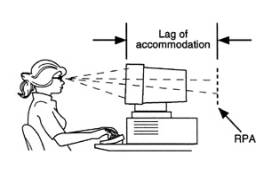
3. Fatigue of the cilliary muscle which remain contracted for long period of time as we continuously stere at the screen.
The entity called computer vision syndrome.(cvs)
As a golden rule prevention is better than cure.
Asthenopic symptoms in the eye are responsible for much of the morbidity in CVS. Proper rest to the eye and its muscles is recommended to relieve the associated eye strain. Various catch-phrases have been used to spread awareness about giving rest to the eyes while working on computers. A routinely recommended approach is to consciously blink the eyes every now and then (this helps replenish the tear film) and to look out the window to a distant object or to the sky—doing so provides rest to the ciliary muscles.


You can protect eyes for all these ill effect by simple following measures
1. Keep monitor at list 2 feet away from your eyes.
2. Blink your eyes more frequently and also roll eye balls in circular fashion with closed lids every now and then.
3. Remove your eyes away from computer to relax eye muscle by looking through window or opposite corner of the room
4. Drink lot of water. An adult should drink at list 3 liters of waters in dry and hot conditions
5. Don’t expose eyes to wind of fan or air conditioner directly or on bike cover eyes with protective glasses.]
6. Dry eye "20-20-20 rule"every 20 minutes, focus the eyes on an object 20 feet (6 meters) away for 20 seconds.Givesa convenient distance and time frame for a person to follow the advice from the optometrist and ophthalmologist. Otherwise, the patient is advised to close his/her eyes (which has a similar effect) for 20 seconds, at least every half hour. is a major symptom that is targeted in the therapy of CVS. The use of over-the-counter artificial-tear solutions can reduce the effects of dry eye in CVS.
.
7.Adjust monitor brightness and contrast settings: Go to your monitor settings and decrease the brightness and contrast until you find the balance that’s easiest on your eyes. You’d be surprised how bright and contrasted the default settings are. Make sure that your desktop and color scheme aren’t agitating your eyes either. Opt for neutral and darker-colored tones with minimal contrast until you find the right color balance. Additionally, pay attention to the brightness and contrast levels of different web pages and documents. If you’re having trouble reading a page of gray text on a black background, print it out instead or at least copy and paste into a new document with dark text on a white background.

8.Adjust other lights in the room: Even if your monitor and desktop settings are set for optimal use, light from your surroundings can irritate your eyes. If the room is too dark, that can affect the overall brightness of the monitor. If the room is too bright, it can create a glare on your monitor. Avoid glare that goes directly into your eyes — this occurs when you’re facing an uncovered window. Avoid glare come from a light source directly behind you. Consider using an anti-glare screen if necessary. And position desk lights at an angle from behind, as lights that shine directly onto your reading surface (e.g. desk) are more harsh than light bouncing off the surface at a slight angle.
 9.Enlarge text: Your eyes have to strain to read small text, so keep text large to give your eyes a break. When working in text editors or viewing online materials, use the keyboard shortcut to magnify text (ctrl + “+”) as needed. For those webpage text areas that tend to be too cramped — pull them over to your favorite text editor to have more space. Always magnify to a size that feels comfortable. If you have to move your head closer to the screen, squint, or don’t feel relaxed while reading — the text is still too small. And while you’re at it, make sure your screen resolution is set high.
10.Relax: Work is important, but you need to be relaxed enough so that tension and stress don’t get in the way. Take frequent short breaks during the day, and longer breaks one to two times a day so that you can get your mind off work. Walks are good because give you exercise, fresh air, and help you look off into farther distances. At your desk you can do neck rolls, shoulder shrugs and arm swings to stretch out your neck and shoulders. Rub your temples to release any head tension. Give your eyes periods of darkness for rest, by closing your eyes or cupping your palms over your eyes (preferably in a quiet environment).
11.Wear sunglasses: When you’re not in front of your computer, you can still protect your eyes from incoming light. This will help them endure longer periods in front of the monitor. Wear sunglasses outdoors (or even indoors if necessary). Make sure that the lenses have UV protection. If they don’t — they’ll have the opposite effect and tire out your eyes. (This is because the darker environment created by the tinted lenses will cause your irises to dilate and receive more light — UV light which causes discomfort, harm and fatigue.) Polarized lenses (that also have UV protection) are ideal because they minimize glare.
12.Computer holiday As far as possible avoid using computers on your work holidays
13.You can use lubricating eye drops available after ophthalmologist's consultation


Remember, your eyes weren’t designed for nonstop computer use. If you work on your computer for long hours, eyestrain is bound to occur. Don’t let eyestrain sneak up on you. Make healthy adjustments as soon as you can.

sourse :-http://www.howtogeek.com/54872/how-to-avoid-computer-eye-strain-and-keep-your-eyes-healthy/